
the microbe that makes snowflakes
pseudomoas syringae

Hey friends, happy december!
I’ve got a wild fact for you today: some bacteria actually help make snow. apparently snowflakes might not just fall from the sky on their own—tiny microbes can play a starring role. One of these snow-making microbes is Pseudomonas syringae, and it has a special trick up its sleeve.
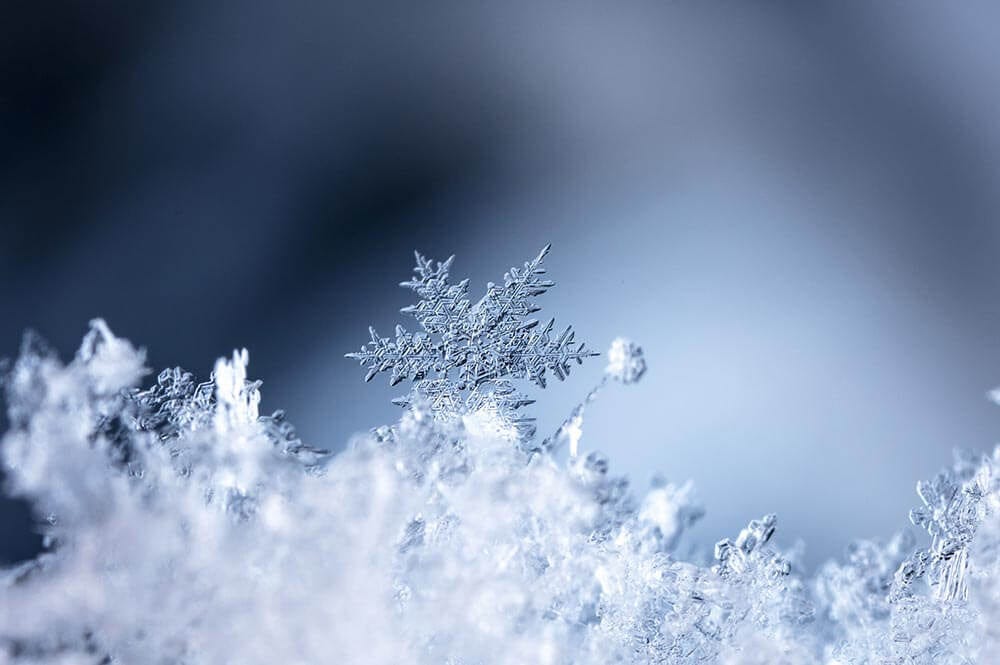
If you’ve ever wondered how snow machines at ski resorts work—or why it sometimes snows when the conditions don’t seem perfect—P. syringae might just be part of the answer.
What is Pseudomonas syringae?
Pseudomonas syringae is a type of bacteria that lives on plants, leaves, and even in clouds. Scientists first noticed it because it caused frost damage on crops—but the reason behind that was fascinating. This bacterium produces a unique ice-nucleating protein on its surface.
Think of this protein like a tiny blueprint for ice crystals. Normally, water needs to get very cold to freeze, but with P. syringae around, water can freeze at warmer temperatures than usual. That’s why frost forms on plants even when it’s not technically “cold enough” for ice to naturally form.
How Does Ice Nucleation Work?
Let’s break it down simply:
Water molecules usually move freely as a liquid.
To freeze, they need a surface or structure to line up into a solid crystal.
P. syringae’s ice-nucleating protein acts as that structure, helping water molecules organize into ice at higher temperatures than normal.
You can imagine it as the bacteria “inviting” water molecules to join together to form a snowflake. Pretty impressive for a single-celled organism!
Real-World Applications
Now here’s the fun part—humans have learned to harness this microbe’s ice-making powers. One application is artificial snow production at ski resorts.
By using P. syringae or its ice-nucleating protein, snow machines can:
Make snow faster, even when temperatures aren’t extremely low.
Conserve water, because they need less of it to produce snow.
Create better snow quality, which is more like natural snow and easier to ski on.
And it doesn’t stop there. Scientists are also exploring other ways this protein could be used:
Cryopreservation of foods and biological samples.
Weather modification experiments (yes, people actually study how to influence rain and snow!).
Why It Matters
This tiny bacterium reminds us that microbes are not just “germs”. They’re powerful, versatile, and sometimes surprisingly helpful. P. syringae has literally shaped ecosystems (frost patterns on plants) and even human recreation (ski resorts).
It also gives us a glimpse of how nature can inspire technology. By studying these ice-nucleating proteins, we might discover ways to improve agriculture, climate research, and sustainable practices—all thanks to a bacterium we could never see without a microscope.
My Takeaway
When I first learned about P. syringae, I couldn’t stop thinking about the invisible work happening above our heads in clouds and around our plants. It’s wild to consider that a microscopic organism is quietly influencing weather and ecosystems.
It also made me reflect on why microbiology is so endlessly fascinating: every tiny organism has a story, a role, and sometimes a surprising twist that touches our lives in ways we’d never expect.
Let’s Chat
Next time you’re out in the snow (or making it artificially), remember: microbes might be behind those flakes!
Question for you: What’s the most surprising way you’ve seen microbes affecting the world around us? Drop your thoughts in the comments—I love hearing your ideas!
x Larae’s Lab